The Nature of a Project

Project work promotes "children's intellectual development by engaging their minds in observation and investigation of selected aspects of their experience and environment" (Katz & Chard, 2000).

Thursday, March 22, 2012

The power of Projects


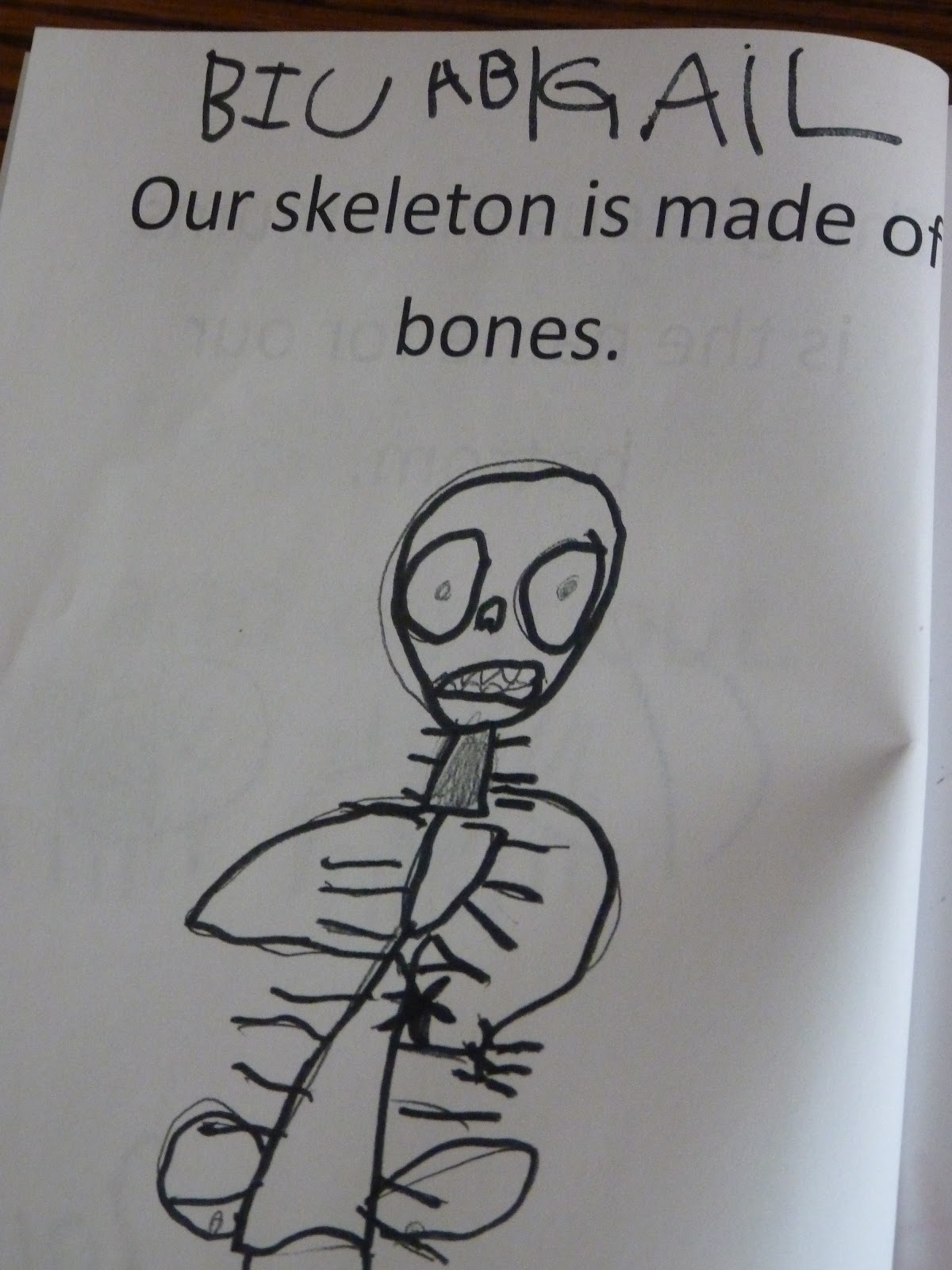
Our body, something all children have experience with and which can generate many questions.  The above web is where this group of children  began, but through the facilitation of a wonderful teacher, look at the vocabulary and knowledge they gained. 


Just consider the vocabulary, knowledge and self awareness they have gained.  And this is just a small sampling of what this group of children did during this project.  The power of projects to differentiate (one  child was very intrigued by his butt and was able to build vocabulary to gluteus maximus) to the knowledge of the structure of our body.  Does this not show the benefits of a non-standardized curriculum and the power of projects.

Tuesday, March 20, 2012

disruptive wonder, kelli anderson

http://www.youtube.com/watch?v=dvI5JuB6ThE

How do we create disruptive wonder in our current educational system, how do we discover the hidden talents in every day things?  I think this is a wonderful question to pose in our current educational environment.  Teachers who engage in project work help children discover the hidden talents in every day things, bu also help us discover the hidden talents in children and in ourselves.  I believe that through curricular approaches like the Project Approach, we push the boundaries of what is expected in education and we reject the normal order of traditional education.  The Project Approach calls for use to expect more than our current reality, a reality most teachers claim doesn't benefit the students or themselves as educators.  So, why do we continue to accept the normal order of things in education?  I would appreciate any comments or feedback because I struggle with this when working with teachers.  While they don't like the norm, they find it so difficult to make the paradigm shift towards discovery.  Thoughts?

Wednesday, March 7, 2012

The 4C's

Communication, collaboration, critical thinking and creativity:  The 4C's.  With our fast paced world it is almost impossible to be able to dictate what exact knowledge and skills our children will need in the future.  Curricular approaches like the Project Approach and Emergent Curriculum naturally support the above "standards" or what Sylvia Chard and Lillian Katz (along with others) describe as dispositions.  The 4C's are no longer just a checklist of knowledge and skills, but dispositions (how we approach teaching, learning and problems). 

To generate some thinking about the 4C's I am posting this wonderful story/video created by one of my favorite children's authors, Peter Reynolds called Above and Beyond.  How do you consider the 4C's and how do you respond to this challenge of the 21st centruy.  How do you think schools are or should be supporting the 4C's?
http://www.youtube.com/watch?v=7KMM387HNQk&feature=player_embedded

Friday, February 17, 2012

Just going through the motions

Early childhood education is the one of the most difficult professions to go into, not only in relation to the amount of work, but also due to how the profession is seen by others.  Repetively teachers say they feel like glorified babysitters, but they are so much more.  They are children's first entry to school, they are nurturers, negotiators, and facilitators of children's first learning experiences.  So why, when they work so hard to provide quality experiences, does it become just an experience of getting by?  How do we help good teachers, those willing to provide quality, early childhood experiences, those who engage students in projects, to not be bogged down?  I know some really good teachers who provide incredibly positive experiences for young children through projects who have to justify such practices and to "compete" with those who merely teach to the standards.  Why is this when we know so much about quality early childhood experiences.  Should these teachers become so burned out that they resort to merely going through the motions?  If there are any of you out there, explain this struggle and tell your story so we as a group can advocate for quality teachers who struggle every day to provide authentic experiences for young children.  And let's dialogue about how to promote quality early chlidhood experiences to support quality, early learning experiences and the teachers who provide them.

Wednesday, February 8, 2012

podcast on the arts and education

The arts and meeting the needs of the whole child.  Integrating the arts into all facets of education (can we do it?


http://www.wholechildeducation.org/resources/wcpodcast-10710.mp3


thoughts, responses, extensions?

perceptions of early childhood

I am always struck by the composition of parents at my daughter's dance class.  The majority of us are teachers at some level, going from elementary to college level teaching.  When I went to pick her up this evening one was grading 3rd grade papers and complaining about how they just aren't "performing", as she dilgently graded a stack of worksheets.  She began discussing what I think is a valid point, elementary should be more about the basic facts, children can't seem to add the simplest of things in their head and application seems mute. At the same time she was calling her class stupid and idiots as she was eagerly ready to hand out the same packet, again, to her students tomorrow.  As an adult, how many of us would just quickly fill in a bubble to be done?
 A dad waiting to also pick up his daughter began discussing a study done which I found both interesting and troubling.  He was mentioning how they did a study specific to math where some children wer not provided any math instruction until 6th grade and others were.  The results of this particular study showed that by the end of the year of 6th grade, those with no instruction were at the same grade level as those with.  Troubling, yes, and more troubling were the results or analyses.  The conclusion was that early childhood educators have so much to teach that they don't have a firm grasp on math and so they are unable to "teach" it.  I find this untrue, but math and science do seem to be components that teachers are wary of or often try to avoid.  My question is why? I know early childhood educators know and are capable of making the content meaningful within project work, what I am unsure of is whether we document and assess enough to make this clear.  Teachers need to start making visible what it is young children in the proper environment are capable of doing and yet early childhood continues to be driven by standardization.  Imagine if those schools which did engage in things like project work or similar, began to be more intentional in collecting data ) - wouldn't we see a shift in teaching and learning?  As I progress in my work, look to find more evidence of this.

Tuesday, February 7, 2012

teaching and learning

The more I work with education students and inservice teachers the more I see a hear numerous definitions of  teaching and learning.  Even with this multiplicity of definitions what I repetitively see is the difficulty teachers have of giving up their "power" in the classroom to move towards more child initiated practices.  This loss of control seems to be a primary reason for teachers struggling to implement more creativity into the classroom and projects.  So, before I write more on this topic I am very curious to know what others think?  How do you define the role of the teacher, what does it mean to learn, and why is it so important for teachers to have this sense of power and control?